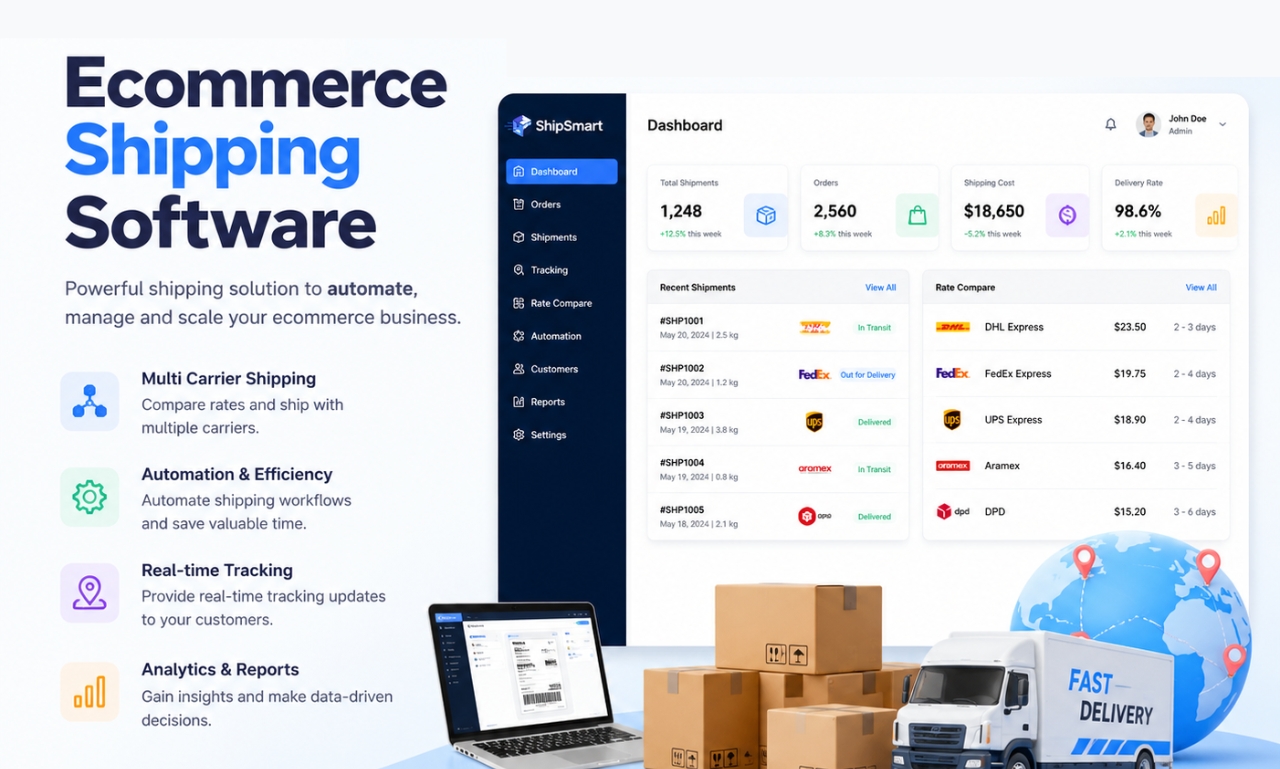
Running an online store is not only about having great products, attractive pricing, and a smooth website. Once a customer places an order, the real operational work begins. That order has to be picked, packed, shipped, tracked, and delivered on time. For growing online businesses, managing this process manually can quickly become stressful, expensive, and full of errors. This is where ecommerce shipping software becomes an important part of the business.
Ecommerce shipping software helps online sellers manage their shipping process from one central platform. It can connect with online stores, marketplaces, carriers, warehouses, and fulfillment tools. Instead of copying order details manually, comparing rates one by one, or updating tracking numbers by hand, businesses can automate much of the shipping workflow. The result is faster fulfillment, better customer communication, lower shipping costs, and fewer mistakes.
For small stores, shipping software can save time and make the business look more professional. For larger ecommerce brands, it can support higher order volume, multi-carrier shipping, international delivery, warehouse management, and return handling. In a market where customers expect fast, affordable, and transparent delivery, ecommerce shipping software is no longer just a helpful tool. It has become a core part of online selling.
What Is Ecommerce Shipping Software?
Ecommerce shipping software is a digital tool that helps online businesses manage the entire shipping process. It usually connects directly with ecommerce platforms like Shopify, WooCommerce, BigCommerce, Magento, Amazon, eBay, Etsy, and other online sales channels. Once an order is placed, the software imports the order details automatically and helps the seller create shipping labels, choose carriers, calculate shipping rates, print packing slips, send tracking updates, and manage delivery status.
The main purpose of ecommerce shipping software is to reduce manual work. Without it, a seller may need to log into different carrier websites, type customer addresses, compare prices manually, generate labels, copy tracking numbers, and send updates to customers. This can work when order volume is very low, but it becomes difficult as sales grow. Even a small typing mistake in an address can lead to delayed delivery, returned packages, or unhappy customers.
A good shipping platform keeps all orders in one dashboard. Sellers can filter orders, select shipping methods, apply rules, print labels in batches, and track shipments from one place. Many tools also offer discounted carrier rates, which can help businesses reduce fulfillment costs. Some shipping software includes return management, inventory syncing, warehouse routing, branded tracking pages, and shipping analytics.
In simple terms, ecommerce shipping software acts as a bridge between your online store, your customers, and your delivery carriers. It keeps the shipping process organized, accurate, and easier to scale.
Why Ecommerce Businesses Need Shipping Software
Shipping is one of the most important parts of the customer experience. A buyer may love your product, but if the package arrives late, gets lost, or comes with poor tracking communication, their overall impression of your business can change. Ecommerce shipping software helps prevent many of these problems by making fulfillment more reliable and professional.
One major reason businesses need shipping software is speed. Customers expect quick order processing, and manual shipping can slow everything down. With automation, order details are imported instantly, shipping labels can be printed in bulk, and tracking information can be sent automatically. This helps businesses process more orders in less time without hiring a large fulfillment team.
Another key benefit is accuracy. Manual data entry often leads to mistakes, especially when sellers handle many orders each day. Ecommerce shipping software reduces the risk of typing errors, wrong addresses, duplicate shipments, and missed tracking updates. This improves both internal operations and customer satisfaction.
Cost control is also a big reason to use shipping software. Many platforms allow sellers to compare rates from multiple carriers. Instead of choosing one default carrier every time, businesses can select the most cost-effective option based on package weight, destination, delivery speed, and service type. Some tools also provide discounted rates that may not be available directly to small businesses.
Most importantly, ecommerce shipping software helps businesses grow. A store handling 20 orders a week may manage manually, but a store handling 200, 500, or 1,000 orders needs a more structured system. Shipping software allows businesses to scale without letting fulfillment become a bottleneck.
Key Features of Ecommerce Shipping Software
The best ecommerce shipping software usually includes several features designed to simplify order fulfillment. One of the most important features is multi-carrier shipping. This allows businesses to connect with different carriers such as USPS, UPS, FedEx, DHL, Royal Mail, Canada Post, Australia Post, and regional delivery providers. Having multiple carrier options gives sellers more flexibility with pricing, speed, and service coverage.
Another important feature is shipping rate comparison. Instead of checking carrier prices separately, the software can show available shipping options in one place. This helps sellers choose the best rate for each order. For lightweight packages, one carrier may be cheaper. For heavy packages or international shipping, another carrier may offer better value. Rate comparison helps businesses avoid overpaying.
Batch label printing is also very useful, especially for stores with high order volume. Instead of printing labels one by one, sellers can select multiple orders and print labels together. This saves time and keeps the packing process more efficient.
Automation rules are another powerful feature. Businesses can create rules based on order value, package weight, customer location, product type, or delivery speed. For example, orders over a certain amount can automatically receive free shipping. Domestic orders can be assigned to one carrier, while international orders can be assigned to another. These rules reduce repetitive decision-making.
Other helpful features include branded tracking pages, automatic customer notifications, return label generation, address validation, customs forms, delivery confirmation, warehouse routing, inventory integration, and shipping reports. Together, these features create a smoother and more professional shipping system.
How Ecommerce Shipping Software Improves Customer Experience
Customers care about shipping more than many businesses realize. They want clear delivery options, fair shipping costs, fast processing, and reliable tracking. Ecommerce shipping software helps businesses meet these expectations by improving communication and consistency throughout the delivery process.
One of the biggest customer experience benefits is better tracking. When an order ships, the software can automatically send tracking information to the customer. Some platforms also offer branded tracking pages, where customers can check their order status without leaving the brand’s website. This makes the experience feel more trustworthy and professional.
Fast fulfillment also improves customer satisfaction. When shipping software reduces processing time, customers receive their orders sooner. Even if the delivery time depends on the carrier, quick order handling creates a better impression. Customers appreciate businesses that ship orders promptly and keep them informed.
Clear shipping options at checkout can also increase trust. Many ecommerce shipping tools can help display accurate shipping rates based on location, package size, and carrier services. This prevents customers from seeing unexpected shipping charges later. When buyers know the cost and delivery estimate before completing the order, they are more likely to feel confident.
Returns are another part of the customer experience. A complicated return process can discourage repeat purchases. Some ecommerce shipping software allows businesses to create return labels, manage return requests, and track returned items. This makes the process easier for both the customer and the business.
In ecommerce, a smooth shipping experience can turn a first-time buyer into a repeat customer. It can also reduce complaints, support tickets, and refund requests.
Ecommerce Shipping Software for Small Businesses
Small businesses often think shipping software is only for large ecommerce brands, but that is not true. In many cases, small businesses benefit the most because they usually have limited time, staff, and resources. A simple shipping tool can help a small store look more organized and professional without requiring a large fulfillment department.
For small ecommerce sellers, time savings are one of the biggest advantages. Instead of manually creating labels or updating tracking numbers, the software handles repetitive tasks quickly. This allows business owners to spend more time on marketing, product development, customer service, and sales.
Shipping software can also help small businesses compete with bigger brands. Customers do not always know how large a company is, but they judge the brand based on the buying experience. Fast shipping updates, professional tracking pages, and smooth delivery communication can make a small store feel trustworthy.
Cost savings matter as well. Small businesses often pay higher shipping rates if they buy postage directly from carriers without discounts. Many ecommerce shipping platforms provide access to lower rates, helping small sellers protect profit margins. Even small savings per package can add up over time.
For businesses selling on multiple platforms, shipping software becomes even more useful. A seller may receive orders from a website, Amazon, Etsy, and eBay at the same time. Instead of checking each platform separately, the software brings all orders into one dashboard. This makes fulfillment easier and reduces the chance of missing an order.
Ecommerce Shipping Software for International Shipping
International shipping can be more complicated than domestic shipping. Sellers need to consider customs forms, duties, taxes, restricted items, delivery timelines, carrier options, and country-specific shipping rules. Ecommerce shipping software can make international fulfillment much easier by helping businesses prepare accurate shipping documents and choose suitable carrier services.
One major challenge with international shipping is customs documentation. If the forms are incomplete or incorrect, packages may be delayed, returned, or held by customs. Many shipping platforms can automatically generate customs forms using order and product information. This reduces manual work and helps improve accuracy.
Shipping rate comparison is also important for international orders. Costs can vary greatly depending on destination, package size, delivery speed, and carrier. Ecommerce shipping software allows sellers to compare international shipping options in one place. This helps businesses choose services that balance cost and delivery reliability.
Some platforms also help with duties and taxes. Depending on the tool, sellers may be able to estimate landed costs, show international buyers clearer charges, or manage delivery duty paid options. This can reduce surprises for customers and improve the buying experience.
Tracking is especially important for international shipments because delivery times are often longer. Customers want to know where their package is and when it may arrive. Automated tracking updates reduce customer anxiety and lower the number of support messages asking about order status.
For ecommerce brands planning to sell globally, shipping software can make international expansion more practical and manageable.
How to Choose the Best Ecommerce Shipping Software
Choosing the right ecommerce shipping software depends on the size of the business, sales channels, shipping volume, product type, budget, and future growth plans. The best tool is not always the most expensive one. It is the one that fits the business workflow and solves the most important shipping problems.
The first thing to check is platform integration. The software should connect smoothly with the ecommerce platform or marketplace you use. If your store runs on Shopify, WooCommerce, Amazon, eBay, or another platform, make sure the shipping tool supports it properly. Strong integration reduces manual work and keeps order data accurate.
Carrier support is another major factor. A good shipping solution should connect with the carriers you already use or plan to use. If you ship domestically and internationally, look for software that supports both local and global carriers. Multi-carrier access gives you more flexibility.
Ease of use matters too. A shipping tool should make fulfillment easier, not more complicated. The dashboard should be clear, label creation should be simple, and automation rules should be easy to set up. If the software is too difficult to use, your team may avoid using it properly.
Pricing should also be reviewed carefully. Some platforms charge a monthly fee, some charge per shipment, and others offer different plans based on order volume. Businesses should compare pricing against expected savings in time, labor, and shipping rates.
Other important factors include customer support, return management, branded tracking, warehouse features, automation options, reporting tools, and scalability. A business should choose software that works for current needs but can also support future growth.
The Future of Ecommerce Shipping Software
Ecommerce shipping software is becoming more advanced as customer expectations continue to rise. Fast delivery, real-time tracking, flexible returns, and lower shipping costs are now major parts of online shopping. Businesses that cannot manage shipping well may struggle to keep customers satisfied.
Automation will continue to play a bigger role. More shipping platforms are using smart rules, predictive delivery options, address validation, and workflow automation to reduce errors and improve speed. As order volumes grow, businesses will depend more on systems that can make shipping decisions quickly and accurately.
Sustainability is also becoming more important. Many customers care about eco-friendly packaging, carbon-conscious delivery, and responsible fulfillment. Some shipping tools are beginning to offer features that help businesses measure shipping impact, choose greener delivery options, or reduce unnecessary packaging.
Another future trend is stronger integration between shipping, inventory, and warehouse management. Businesses want one connected system where orders, stock levels, fulfillment status, returns, and customer updates all work together. Ecommerce shipping software will likely become more central to the full post-purchase experience.