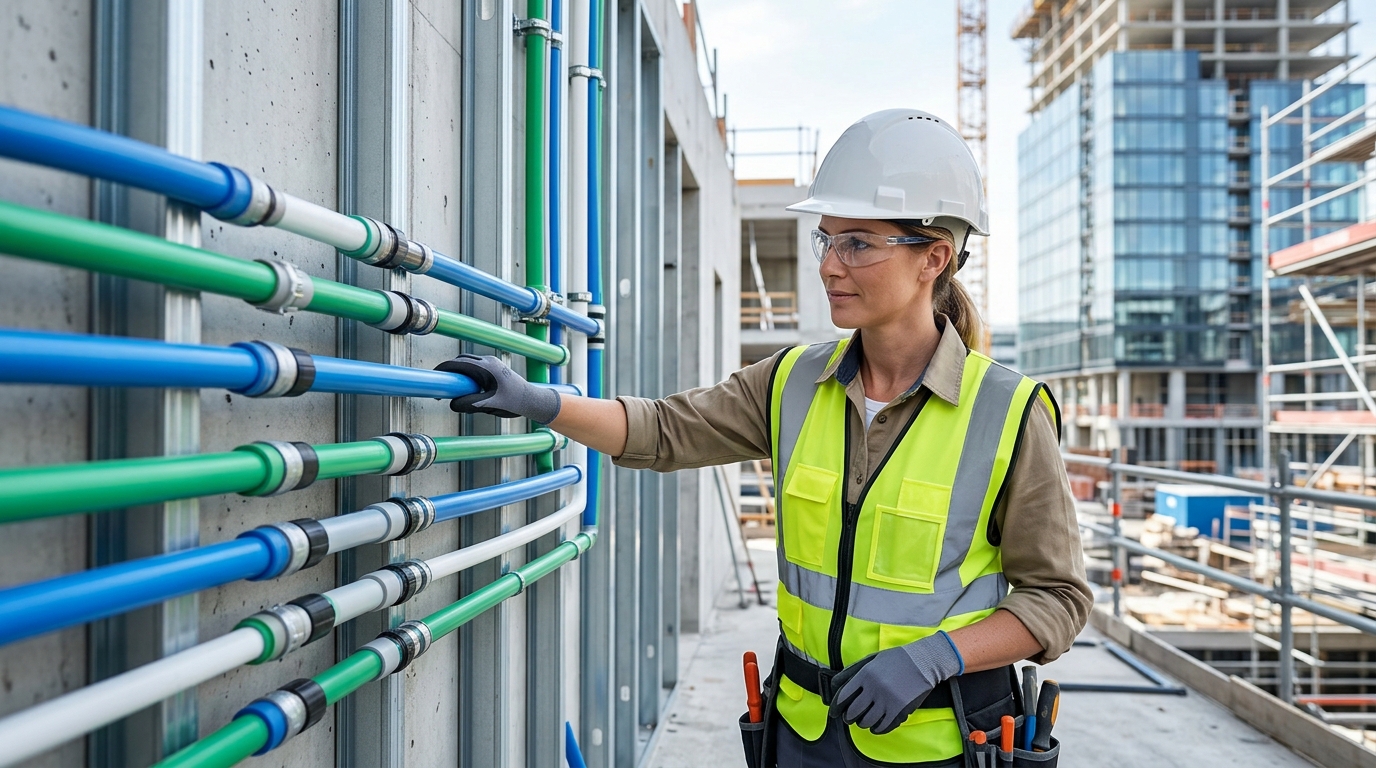
Modern construction demands materials that are strong, durable, cost-efficient, and easy to install. Traditional piping materials like metal and basic plastic often fall short when it comes to long-term performance in complex building systems. This is where composite pipes have become an important solution in the construction industry.
Composite pipes are designed by combining multiple materials to improve strength, flexibility, and resistance to pressure, corrosion, and temperature changes. They are widely used in residential, commercial, and industrial projects where long-term reliability is essential. Companies like Plasco Pipes focus on providing advanced piping solutions that meet these modern construction needs.
What Are Composite Pipes
Composite pipes are made by combining two or more different materials to create a single pipe with enhanced performance characteristics. For example, they may include layers of plastic, aluminum, or reinforced polymers.
Each layer serves a specific purpose, such as improving strength, preventing leakage, or resisting corrosion. This layered structure makes composite pipes more reliable than single-material pipes.
Why Composite Pipes Are Used in Construction
Construction projects require piping systems that can handle pressure, temperature variation, and long-term usage without failure. Composite pipes are designed to meet these requirements efficiently.
They are commonly used in water supply systems, heating systems, cooling systems, and industrial fluid transport.
Key Benefits of Composite Pipes
High Strength and Durability
Composite pipes are stronger than many traditional pipe materials due to their layered structure. They can withstand high pressure and mechanical stress without cracking or breaking.
This makes them suitable for high-rise buildings and large infrastructure projects where reliability is critical.
Corrosion Resistance
One of the biggest problems with metal pipes is corrosion. Over time, exposure to water and chemicals can weaken metal pipes.
Composite pipes do not rust or corrode easily, making them ideal for long-term water supply systems.
Lightweight and Easy Installation
Despite their strength, composite pipes are lightweight. This makes them easier to transport and install compared to heavy metal pipes.
Installation becomes faster, reducing labor costs and project timelines.
Better Thermal Stability
Composite pipes perform well under temperature changes. They do not expand or contract as much as traditional materials, which helps maintain system stability.
This is especially important in heating and cooling systems where temperature variation is frequent.
Leak-Free Performance
The layered structure of composite pipes ensures tight sealing and reduces the chances of leakage. This improves water efficiency and reduces maintenance needs.
Long Service Life
Composite pipes are designed for long-term use. Their resistance to corrosion, pressure, and temperature changes helps extend their lifespan significantly.
Applications of Composite Pipes in Construction
Residential Buildings
Used in water supply systems, bathroom plumbing, and kitchen piping networks.
Commercial Buildings
Used in large plumbing systems, HVAC systems, and fire safety installations.
Industrial Projects
Used for transporting fluids, chemicals, and other industrial materials.
Infrastructure Projects
Used in large-scale water distribution and drainage systems.
Role of Composite Pipes in Modern Engineering
Modern construction focuses on efficiency and sustainability. Composite pipes support both goals by reducing material waste, improving energy efficiency, and lowering maintenance requirements.
Their reliability also reduces the risk of system failure, which is important in large-scale infrastructure projects.
Comparison with Traditional Pipes
Metal Pipes
Metal pipes are strong but prone to corrosion and heavy in weight.
Plastic Pipes
Plastic pipes are lightweight but may lack strength under high pressure.
Composite Pipes
Composite pipes combine the strengths of both materials while reducing their weaknesses, making them a balanced solution for modern construction.
Importance of Quality Manufacturing
The performance of composite pipes depends heavily on manufacturing quality. Poorly made composite pipes may lose their structural advantages.
Manufacturers like Plasco Pipes focus on controlled production processes to ensure consistent quality, durability, and performance in demanding environments.
Installation Considerations
Proper installation is important for maximizing the benefits of composite pipes.
Correct Fitting Techniques
Using proper connectors and fittings ensures leak-free performance.
Avoiding Excess Bending
Although flexible, excessive bending can affect long-term durability.
Pressure Testing
Systems should be tested after installation to ensure proper functioning.
Common Mistakes in Pipe Selection
Many construction issues arise from incorrect pipe selection.
Choosing Based on Price Only
Low-cost pipes may not offer long-term durability.
Ignoring Application Requirements
Different systems require different pipe strengths and materials.
Overlooking Temperature Conditions
Thermal conditions should always be considered before selecting pipe materials.
Future of Composite Pipes in Construction
Composite pipes are expected to become even more common in future construction projects due to increasing demand for durable and efficient infrastructure systems.
Advancements in material science will likely make them even stronger, more flexible, and more cost-effective.
Conclusion
Composite pipes have become a key material in modern construction due to their strength, corrosion resistance, lightweight structure, and long service life. They offer a balanced solution compared to traditional metal and plastic pipes, making them suitable for residential, commercial, and industrial applications.
With reliable manufacturers like Plasco Pipes, construction projects can benefit from advanced piping systems that ensure long-term performance and reduced maintenance costs.