Modern organizations generate vast amounts of data every day. Sales teams track leads and conversions, marketing departments analyze campaign performance, and finance teams monitor revenue, expenses, and profitability. While collecting data is easier than ever, transforming that information into meaningful business intelligence remains a challenge for many companies.
Businesses that rely on spreadsheets and disconnected reporting systems often struggle with data accuracy, reporting delays, and poor visibility into performance. To overcome these challenges, organizations increasingly turn to advanced analytics platforms that centralize information and provide actionable insights.
Among today’s leading business intelligence solutions, zoho analytics has become a preferred choice for companies seeking comprehensive reporting, interactive dashboards, and data-driven decision-making across sales, marketing, and financial operations.
Why Business Analytics Matters More Than Ever
In a competitive marketplace, decisions based on assumptions can be costly. Organizations need real-time visibility into performance metrics to identify opportunities, reduce inefficiencies, and improve profitability.
Business analytics enables companies to:
- Monitor operational performance
- Track sales growth and revenue trends
- Measure marketing campaign effectiveness
- Improve forecasting accuracy
- Identify customer behavior patterns
- Optimize resource allocation
- Support strategic decision-making
A centralized analytics environment allows leaders to access reliable information from multiple sources and transform raw data into meaningful insights.
The Growing Need for Unified Reporting
Many businesses use multiple software platforms to manage their operations. Customer information may reside in CRM systems, financial data in accounting software, and marketing performance metrics across various advertising platforms.
When data remains isolated within separate systems, reporting becomes complex and time-consuming. Teams often spend hours manually gathering information before creating reports.
Unified reporting solves this challenge by consolidating information into a single platform where users can analyze business performance from one location. This approach improves collaboration, enhances visibility, and supports faster decision-making.
How Zoho Analytics Enhances Sales Reporting
Sales teams depend on accurate data to monitor performance and achieve revenue goals. Without reliable reporting, identifying trends and forecasting future growth becomes difficult.
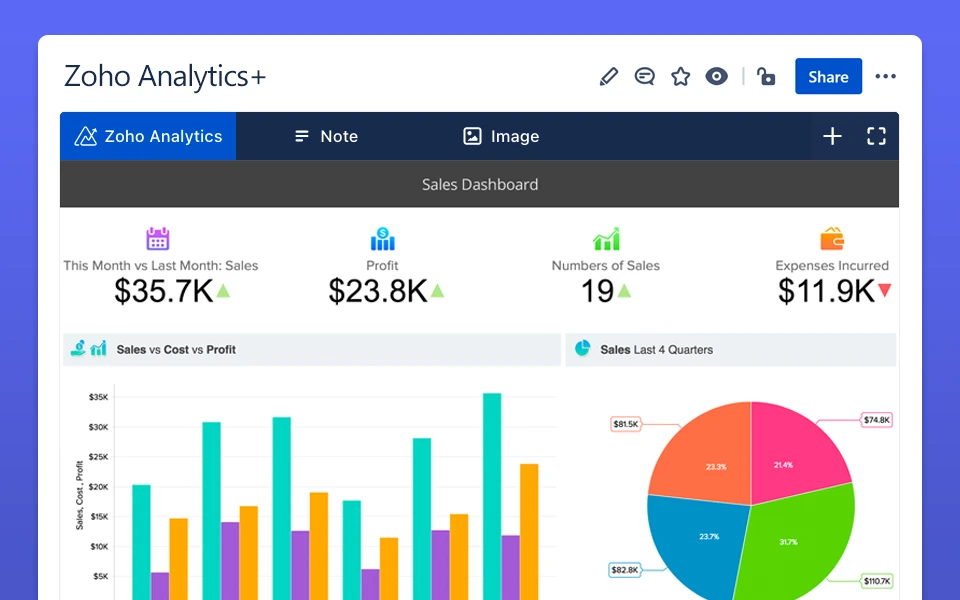
Organizations implementing zoho analytics can create comprehensive sales dashboards that provide visibility into:
- Lead generation performance
- Opportunity pipelines
- Conversion rates
- Sales cycle duration
- Revenue growth
- Territory performance
- Representative productivity
Sales managers gain the ability to monitor key performance indicators in real time and identify areas that require attention.
Instead of reviewing static spreadsheets, decision-makers can access dynamic dashboards that update automatically as new information becomes available.
Improved Pipeline Visibility
A healthy sales pipeline is essential for sustainable growth. Analytics platforms help organizations understand where prospects are in the buying journey and identify potential bottlenecks.
With detailed reporting capabilities, businesses can:
- Track deal progression
- Monitor stage conversion rates
- Evaluate win-loss ratios
- Forecast future revenue
- Assess sales team effectiveness
This level of visibility enables sales leaders to make informed adjustments that improve overall performance.
Better Revenue Forecasting
Accurate forecasting helps organizations allocate resources effectively and prepare for future opportunities.
Advanced reporting tools analyze historical performance, seasonal trends, and pipeline data to create more reliable projections.
As a result, businesses can reduce uncertainty and make strategic decisions with greater confidence.
Strengthening Marketing Performance Through Analytics
Marketing teams invest significant resources in generating awareness, attracting prospects, and converting leads into customers. Measuring campaign effectiveness is critical for maximizing return on investment.
A comprehensive analytics solution allows marketers to evaluate performance across multiple channels, including:
- Search engine optimization
- Content marketing
- Email campaigns
- Social media initiatives
- Paid advertising
- Referral programs
By consolidating performance data, organizations gain a clearer understanding of which strategies deliver the best results.
Campaign Performance Tracking
Successful marketing requires continuous optimization. Analytics dashboards help teams monitor important metrics such as:
- Website traffic
- User engagement
- Conversion rates
- Lead quality
- Cost per acquisition
- Customer lifetime value
These insights help marketers refine their campaigns and focus resources on the most profitable activities.
Understanding Customer Behavior
Customer behavior analysis plays a vital role in modern marketing strategies.
Analytics platforms help organizations identify:
- Purchase patterns
- Audience demographics
- Content preferences
- Engagement trends
- Customer journeys
This information enables businesses to deliver more personalized experiences and improve customer satisfaction.
Financial Reporting Made Simpler
Financial reporting is one of the most critical functions within any organization. Executives, investors, and stakeholders depend on accurate financial information to assess business health and support decision-making.
Traditional reporting methods often involve manual processes that increase the risk of errors and consume valuable time.
Modern analytics platforms simplify financial reporting by automating data collection and visualization.
Key Financial Metrics at a Glance
Finance professionals can monitor important indicators through interactive dashboards, including:
- Revenue performance
- Profit margins
- Cash flow
- Operating expenses
- Budget variance
- Accounts receivable
- Accounts payable
Access to real-time financial insights enables organizations to respond quickly to changing business conditions.
Improved Budget Management
Budget planning requires accurate historical data and reliable forecasting capabilities.
Analytics solutions help finance teams:
- Compare actual performance against budgets
- Identify spending trends
- Monitor departmental expenses
- Improve resource allocation
- Support strategic planning initiatives
This leads to better financial control and more effective business management.
Benefits of Data Visualization
Raw data can be difficult to interpret, especially when large datasets are involved.
Visualization transforms complex information into intuitive charts, graphs, and dashboards that make trends easier to understand.
Benefits of data visualization include:
- Faster analysis
- Improved decision-making
- Enhanced stakeholder communication
- Better performance monitoring
- Increased operational transparency
Visual reporting helps organizations uncover patterns that might otherwise remain hidden within spreadsheets and databases.
Real-Time Decision Making
Business environments change rapidly. Organizations that rely on outdated reports may miss opportunities or fail to respond to emerging challenges.
Real-time analytics provides immediate access to current information, allowing leaders to:
- Monitor ongoing performance
- Identify issues quickly
- Evaluate business trends
- Respond to market changes
- Improve operational efficiency
Faster access to insights creates a significant competitive advantage.
Scalability for Growing Organizations
As businesses expand, reporting requirements become more complex.
An effective analytics platform must scale alongside organizational growth and accommodate increasing data volumes.
Modern business intelligence solutions support:
- Multiple departments
- Large datasets
- Diverse data sources
- Advanced reporting requirements
- Custom dashboards
- Enterprise-level security
Scalability ensures that organizations can continue extracting value from their data as operations evolve.
Data-Driven Culture and Organizational Success
Technology alone does not guarantee success. Organizations must also cultivate a culture that values data-driven decision-making.
When employees have access to accurate information, they can make better choices and contribute more effectively to organizational goals.
A strong analytics strategy promotes:
- Accountability
- Transparency
- Collaboration
- Continuous improvement
- Strategic alignment
Companies that embrace data as a strategic asset often outperform competitors that rely primarily on intuition.
Choosing the Right Analytics Solution
Selecting an analytics platform requires careful consideration of business requirements.
Important factors include:
- Ease of use
- Integration capabilities
- Reporting flexibility
- Dashboard customization
- Data security
- Scalability
- Cost effectiveness
Organizations should evaluate how well a platform supports the needs of sales, marketing, and finance teams while providing a unified view of performance.
Conclusion
Data has become one of the most valuable assets in modern business. Organizations that effectively collect, analyze, and act on information gain a substantial competitive advantage in their industries.
Whether the goal is improving sales performance, optimizing marketing campaigns, or enhancing financial reporting, analytics plays a central role in achieving sustainable growth.
By leveraging powerful reporting, visualization, and business intelligence capabilities, zoho analytics helps organizations transform raw information into actionable insights that drive smarter decisions, greater efficiency, and long-term success.
Frequently Asked Questions
What is Zoho Analytics used for?
Zoho Analytics is a business intelligence and reporting platform that helps organizations analyze data, create dashboards, generate reports, and make informed decisions across sales, marketing, and financial operations.
How does Zoho Analytics improve sales reporting?
It provides visibility into sales pipelines, conversion rates, revenue performance, forecasting metrics, and team productivity through interactive dashboards and automated reporting.
Can Zoho Analytics help marketing teams?
Yes. Marketing professionals can track campaign performance, monitor lead generation, analyze customer behavior, and measure return on investment across multiple channels.
Why is financial reporting important for businesses?
Financial reporting provides insight into revenue, expenses, profitability, and cash flow, helping organizations make informed strategic and operational decisions.
What are the benefits of real-time analytics?
Real-time analytics allows businesses to monitor current performance, identify trends quickly, respond to changes faster, and improve decision-making accuracy.